In the world of social media, transparency matters. When influencers promote products or services in exchange for payment or perks, federal law requires them to let their audience know. This isn’t just an optional best practice—it’s the law.
Under the Federal Trade Commission (FTC) guidelines, anymaterial connection—whether it’s a free product, a paid partnership, or even a discount—must beclearlydisclosed. This means making it obvious to your followers that you’re being compensated for your content.
You Can’t Shift the Responsibility
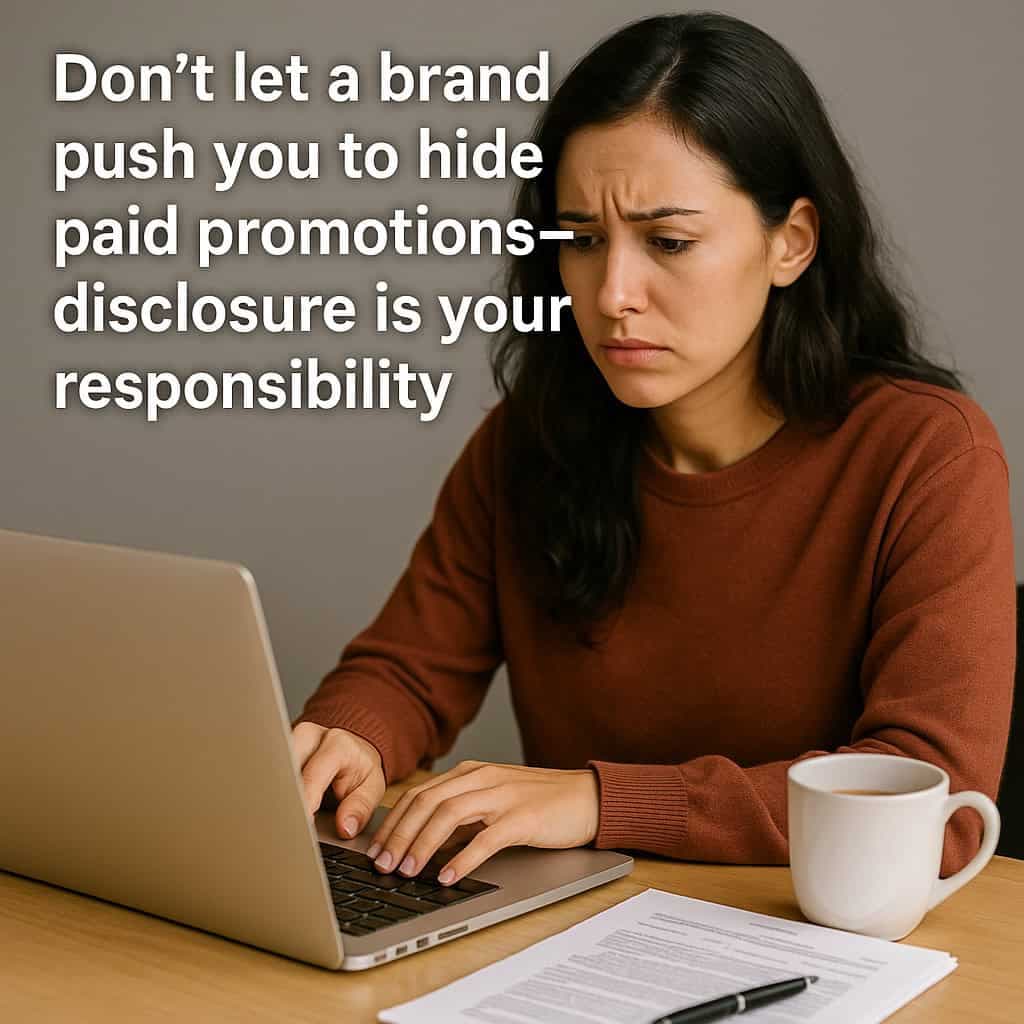
A common misconception among influencers is that if the company paying them doesn’t mention disclosure, they’re off the hook. In reality, the influencer bears the ultimate responsibility. The FTC has made it clear: even if a brandtellsyou to keep it quiet or avoid using certain language (like #ad or #sponsored),youare still legally required to let your followers know.
This can’t be waived or signed away in a contract. If you fail to disclose a paid promotion, you’re the one facing the penalties—up to thousands of dollars per violation and even potential lawsuits if your post misleads consumers.
Watch Out for Brands That Push for Silence
Some brands try to sidestep the rules by encouraging influencers not to disclose paid relationships or by providing vague “talking points” that downplay the promotional aspect. This isn’t just unethical—it’s illegal. If a company is telling you to hide the paid nature of your collaboration, that should be a red flag.
Not only are they risking their own liability, but they’re also putting you, the influencer, directly in the crosshairs. The FTC has increased enforcement of influencer disclosure rules in recent years, so this isn’t something to ignore.
Practical Tips for Influencers
Here’s what influencers should do:✅ Disclose your paid relationship at thestartof your caption or video, not buried in hashtags.✅ Don’t rely on a company’s assurance that “it’s fine not to mention it.”✅ Keep proof of your disclosures in case of an FTC investigation.
Conclusion
If you’re being paid or compensated in any way to post about a product, you must disclose it—no matter what the company says. Transparency isn’t just a suggestion; it’s your legal obligation.
If you have questions about your influencer agreements or need help protecting yourself from brands that may be trying to push you to violate these laws, contact us atLandry Legal, PLLC. We’re here to make sure you stay compliant and protect your brand’s reputation.