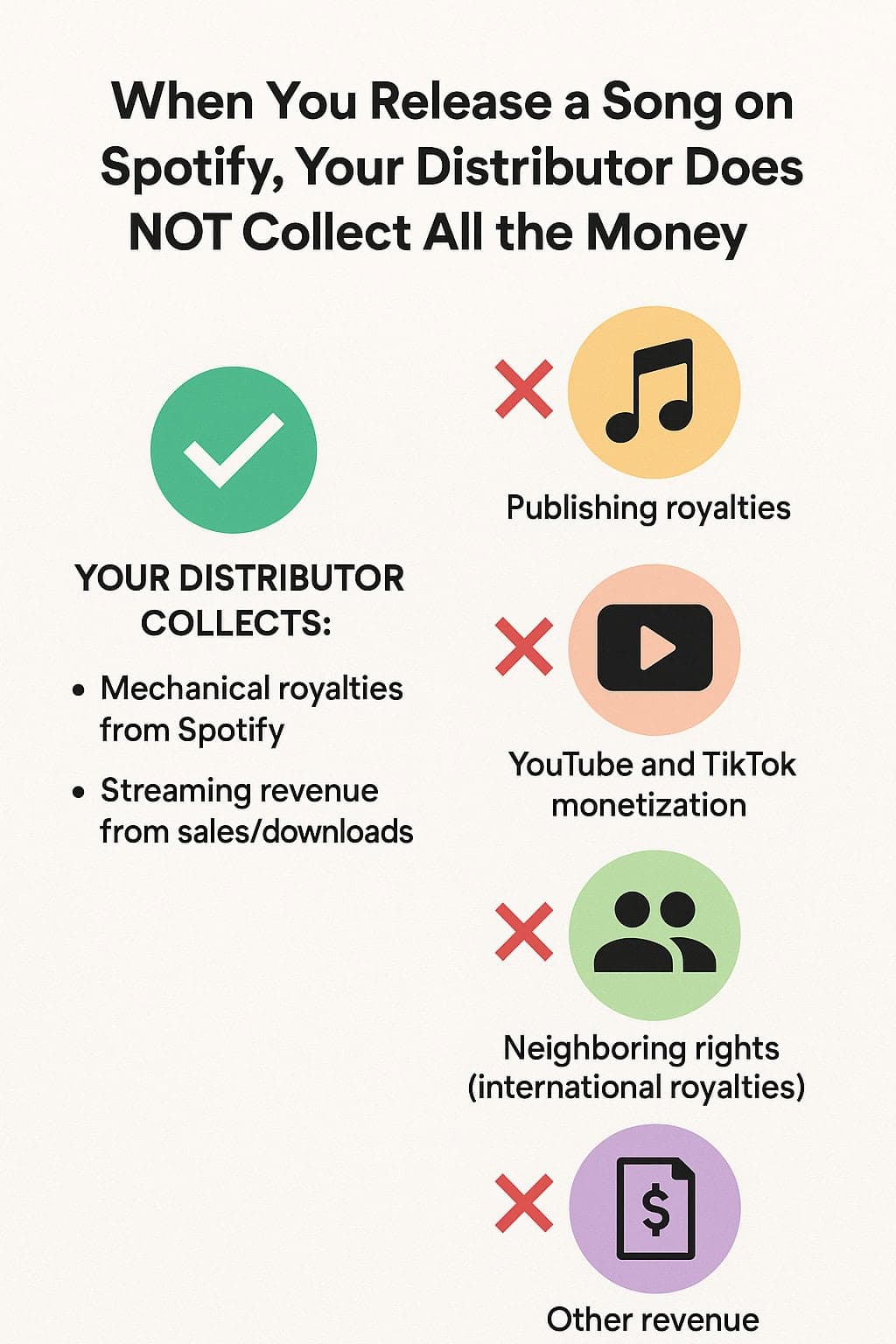
Releasing a song through platforms like DistroKid, TuneCore, or UnitedMasters is a great first step to getting your music on Spotify. But here’s the truth many artists don’t realize:your distributor doesn’t collect all the royalties your music is generating.
That means even if you’re getting paid through your distributor dashboard,you are still be missing out on thousands in uncollected revenue, especially if your song is gaining traction.
So where’s the rest of your money hiding? Let’s break it down.
What Your Distributor Collects (And What They Don’t)
Distributors are responsible for delivering your music to Spotify and other platforms. In return, they typically collect:
- Your share of streaming revenue from platforms like Apple Music, Amazon, etc.
- Revenue from sales/downloads (if applicable)
That’s important money, but it’s only apieceof the full picture.
What Your Distributor Doesn’t Collect
There are several other types of royalties and rights that most distributors don’t touch, either because they’re not built to, or because they leave it up to you to register elsewhere:
1. Publishing Royalties
Spotify paysmechanical and performance royaltiesto songwriters and publishers separately. Even if you’re both the recording artist and the songwriter,you won’t receive your full publishing royalties unless you’re properly registeredwith a publishing administrator or PRO (Performing Rights Organization).
Your distributor doesn’t collect:
- Performance royalties from ASCAP, BMI, or SESAC
- Global mechanical royalties (from outside the U.S.)
- Publishing revenue from sync placements or lyric use
2. YouTube and TikTok Monetization
Unless you’ve specifically opted into a content ID program or social media monetization through your distributor, you’re likelynot earning anythingfrom people using your music in YouTube videos or TikToks.
You may need to register your works with:
- YouTube Content ID
- Facebook Rights Manager
- TikTok’s music monetization system (which may require direct pitching or additional rights management)
3. Neighboring Rights (International Royalties)
In many countries, performers and master recording owners are entitled to a royalty when their song is played on the radio, in public venues, or on TV. These are calledneighboring rights, and your U.S.-based distributor almost never collects them.
To collect this money, you’d need to register with organizations like:
- SoundExchange (U.S.)
- PPL (UK)
- SENA (Netherlands)
Final Thoughts
DistroKid, UnitedMasters, and others are great tools for getting your music online fast, but theydon’t chase down every cent you’ve earned.That part falls on you unless you hire professionals to help manage your rights and royalties.
If you’re serious about maximizing your music income, you need more than just a distributor. You need legal guidance and a monetization plan that covers all your rights as both a recording artist and songwriter.
Need help figuring out what you’re owed or setting up proper royalty collection?Call us at 888-914-0011 or email us at contact@landrypllc.com for a flat-fee music royalty audit or consultation.